This imposing residence stands on the outskirts of Lindenau, 27 miles north of Dresden. Once the home of the noble von Minckwitz family, the Renaissance bones of the castle were built in 1584 on the site of an earlier moated medieval fortification.
Thank you for reading this post, don't forget to subscribe!Due to unrest among the local peasant class, the family subsequently added a tower and a gatehouse to give it a fortress-style appearance.
Several different prominent figures owned the castle throughout the 18th century until it was snapped up by the Princes of Lynar in 1833. They transformed the gardens from a Baroque layout into a large landscaped park, which was fashionable across Europe at the time. They also made additional changes to the castle itself, giving it a neo-Baroque facelift that we still see today.
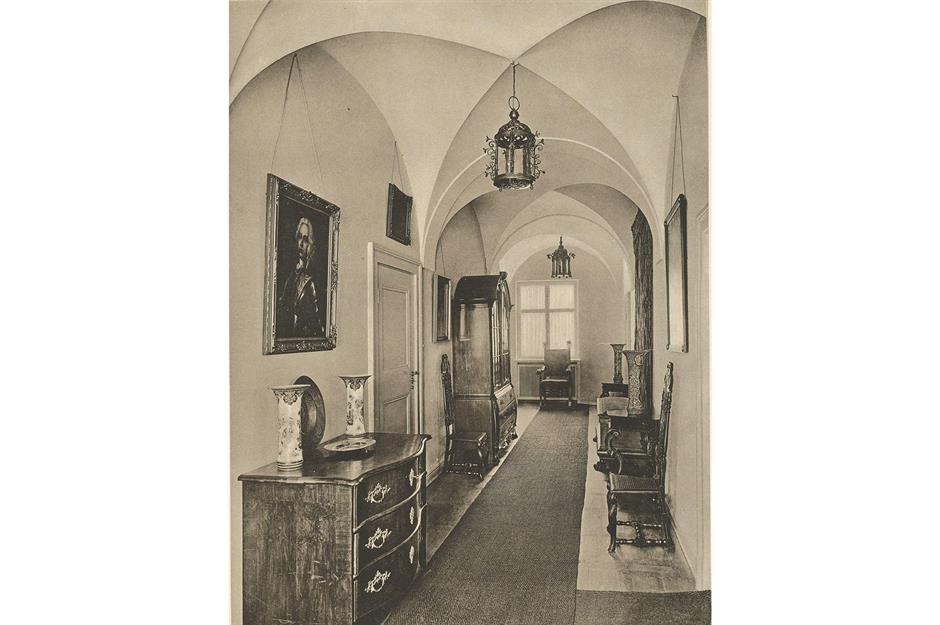
This photo was taken of a hallway on the first floor sometime between 1897 and 1927 after it was transformed by German architect Alfred Breslauer.
During the war, the castle was used as a military hospital. Ownership of the estate was held by the family until 1945 when it was seized by the Soviets.
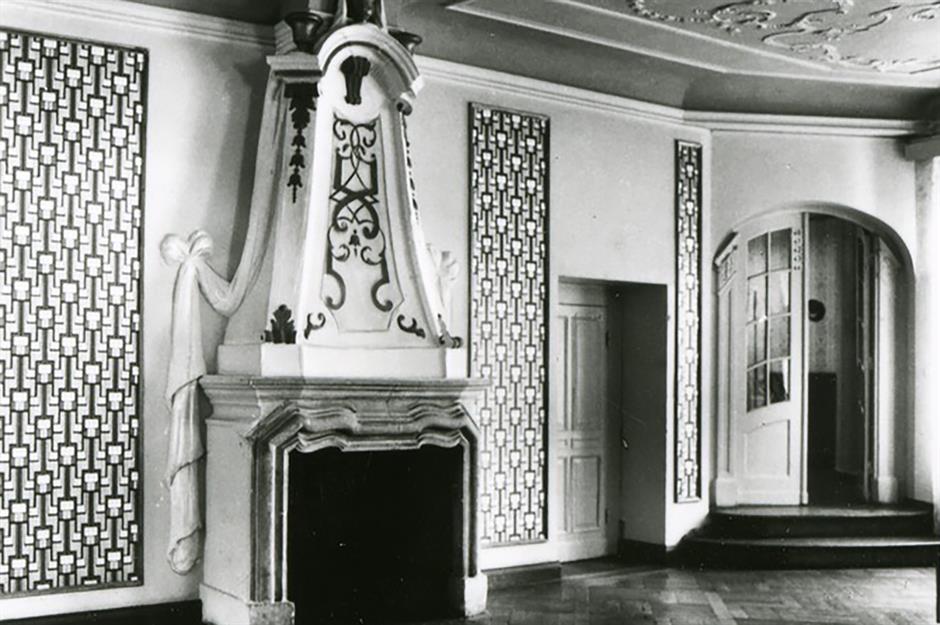
This photo was taken in 1985 and shows the ornate interior in surprisingly good condition, especially considering its use as a children’s home between 1951 and 1997.
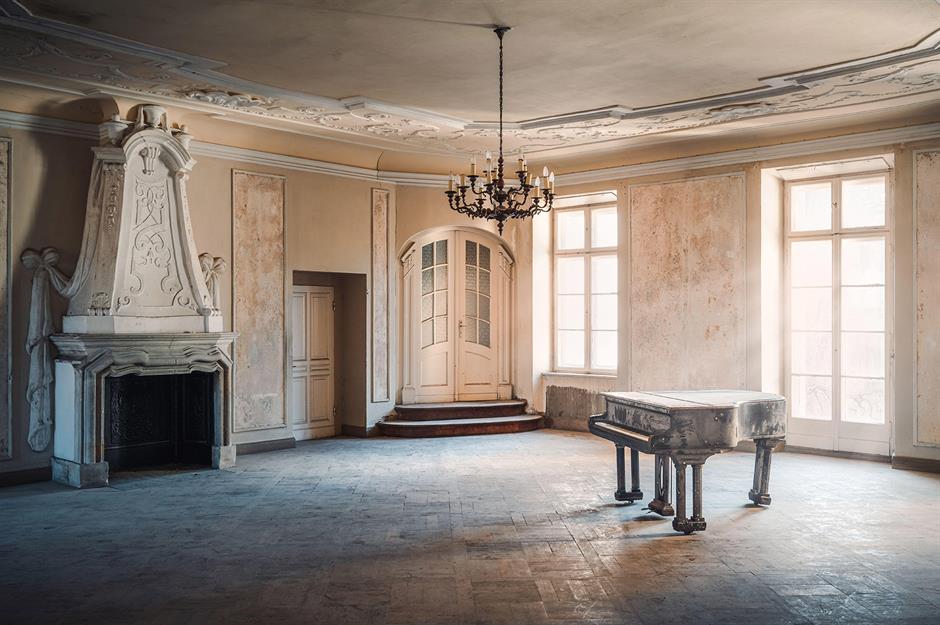
Fast forward almost forty years to this image taken of the same room in 2022.
In 2018, the state attempted to take ownership of the castle after it had stood empty for over 20 years. The case rumbled on for years, but in 2021, the castle was awarded to the municipality.
Luckily, as we can see, the interior had not suffered as much as it could have over the decades it was abandoned. The parquet floors, carved fireplace and stucco ceiling in this room remain in relatively good condition.
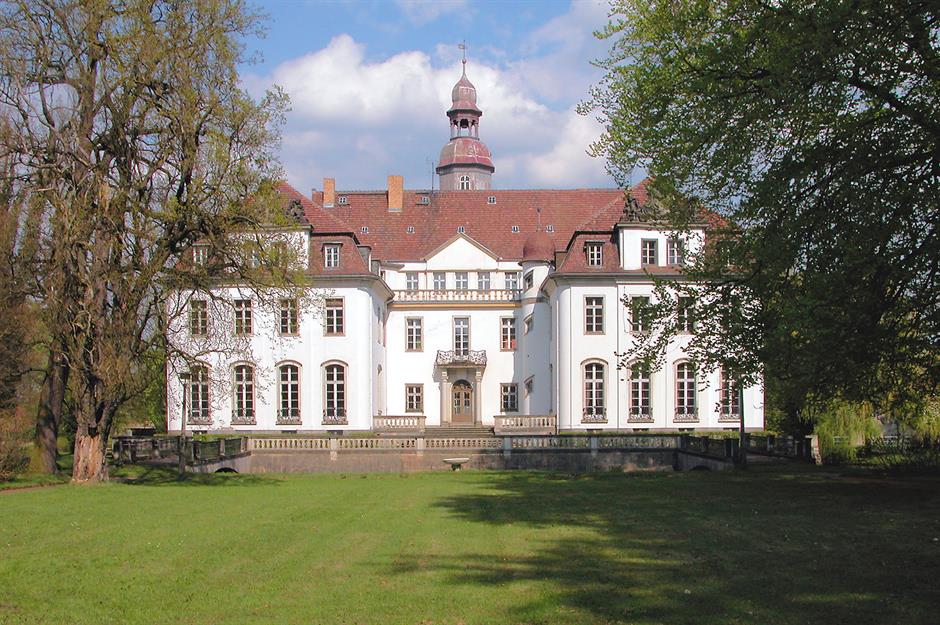
While the residence was put up for sale for just €800,000 (£682k/$869k) in 2021, the castle doesn’t appear to have a buyer just yet.
According to the most recent images posted by the public to Google Maps, little has changed at the historic schloss. Images dated April 2024 show exterior plasterwork peeling from the walls, hints of water damage and a green, algae-filled moat. Unless a new owner is found soon, the historic property risks ending up in ruin.