The romantic ruins of Dwasieden Castle stand on the island of Rügen, nestled in a forest on the shores of the Baltic Sea. Building began on the castle in 1873 after it was dreamt up by banker Adolph von Hansemann, one of the country’s richest men at that time.
Thank you for reading this post, don't forget to subscribe!The castle was designed by Friedrich Hitzig and took four years to build, mainly from French sandstone, Swedish granite and marble.
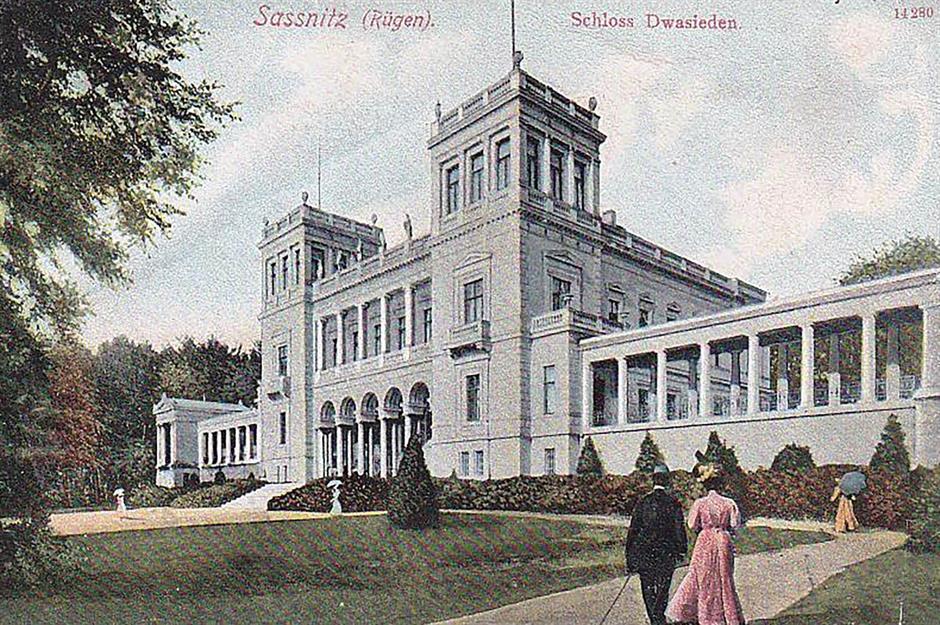
Pictured here in around 1900, the stately home consisted of a square central building, flanked by towers and twin colonnades that ended in Grecian-style pavilions.
A grand ‘marstall’ – or stable building – was built in the 1880s. As we shall see, it’s one of the few parts of the castle that remains standing today.z
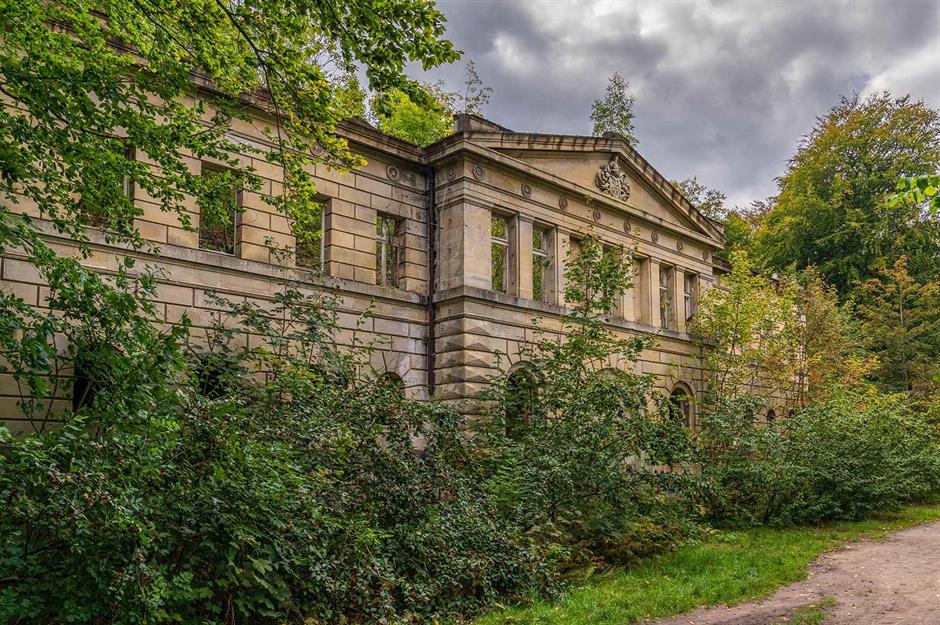
Anyone who stumbles upon these enchanting ruins lost among the trees would be forgiven for thinking they were the remnants of Dwasieden Castle itself. However, they are simply the stable block and carriage house, which gives us an idea of just how grand the main house would have been.
Today, ruins of the pavilions are all that survive of the house itself.
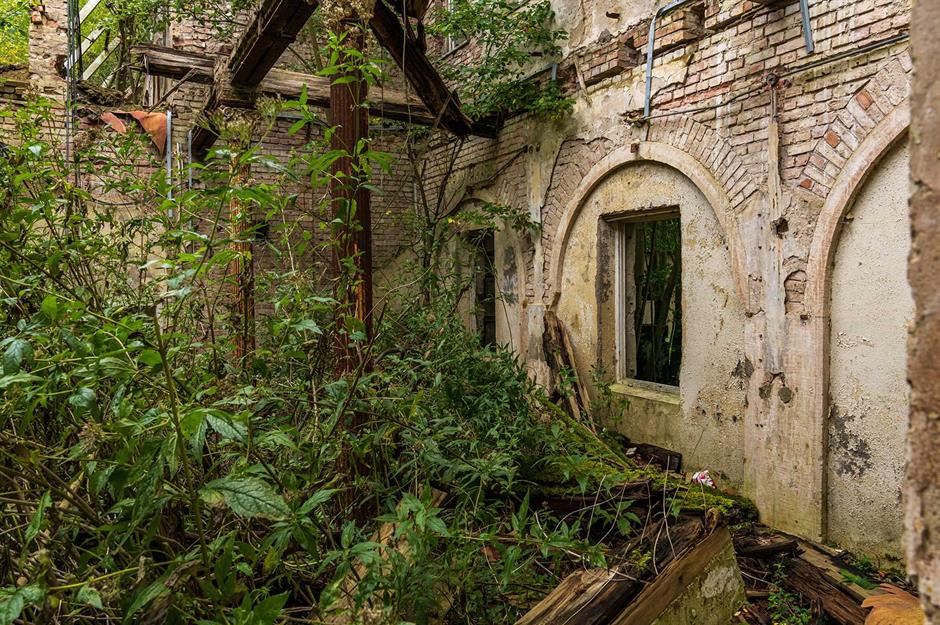
Inside, the forest is slowly reclaiming the building; just the walls and ceiling joists remain. However, the architectural skill that went into these outbuildings is evident.
It’s no surprise that during Hansemann’s tenure, he hosted Germany’s imperial family at the castle, as well as famed German playwright, poet and novelist Gerhart Hauptmann.
After Hansemann’s death, the castle stayed in the family until the dynasty ran into money trouble and reportedly sold the property to the state in 1935. The navy took it over and built an enormous barracks on the site, the burned shell of which still partially stands today
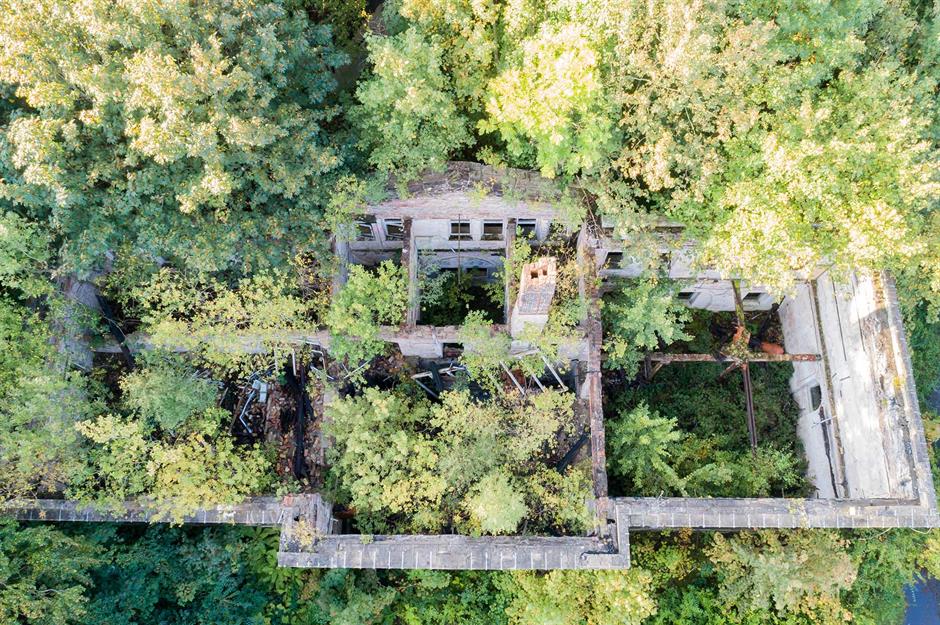
After the war, Dwasieden became a refugee camp and the castle itself was occupied by a Soviet administration office. Sadly, its past as a German naval base sealed its fate and the castle was blown up in 1948 as part of Soviet land reforms, with building materials extracted for reuse elsewhere.
The site was bought and sold multiple times since the fall of the USSR and plans for its regeneration never came to fruition. It changed hands again in 2022, snapped up by a mysterious buyer “from the real estate industry”, according to local newspaper Berliner Morgenpost.
We can’t wait to see whether the once-glorious estate is given a new lease of life or if Mother Nature will reclaim it for herself.