As many as 75,000 Soviet men, women and children once lived in this palatial officers’ house and the surrounding 60,000-acre estate, known as Wünsdorf.
Thank you for reading this post, don't forget to subscribe!Originally built in 1871, Wünsdorf became one of Europe’s largest military bases during the First World War when it was used to house allied prisoners of war. Later, it was repurposed as a training camp for athletes preparing for the 1936 Olympics.
Shortly before the invasion of Poland in September 1939, Germany’s Supreme Command moved in and guided the Second World War campaign from the nearby Zeppelin underground communications bunker on the Wünsdorf base, according to The Guardian.
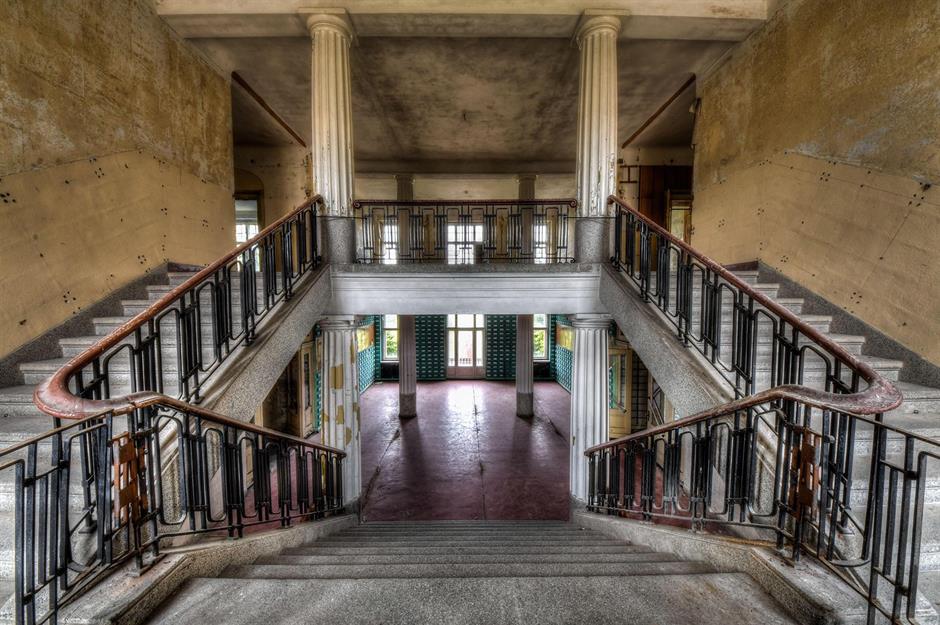
After the war, the Soviets took the estate over. Conveniently placed just 25 miles from Berlin, it was the ideal place to house Russian troops should citizens revolt under the new communist rule.
Although suffering neglect, it’s easy to imagine the Soviet High Command strolling up this grand staircase.
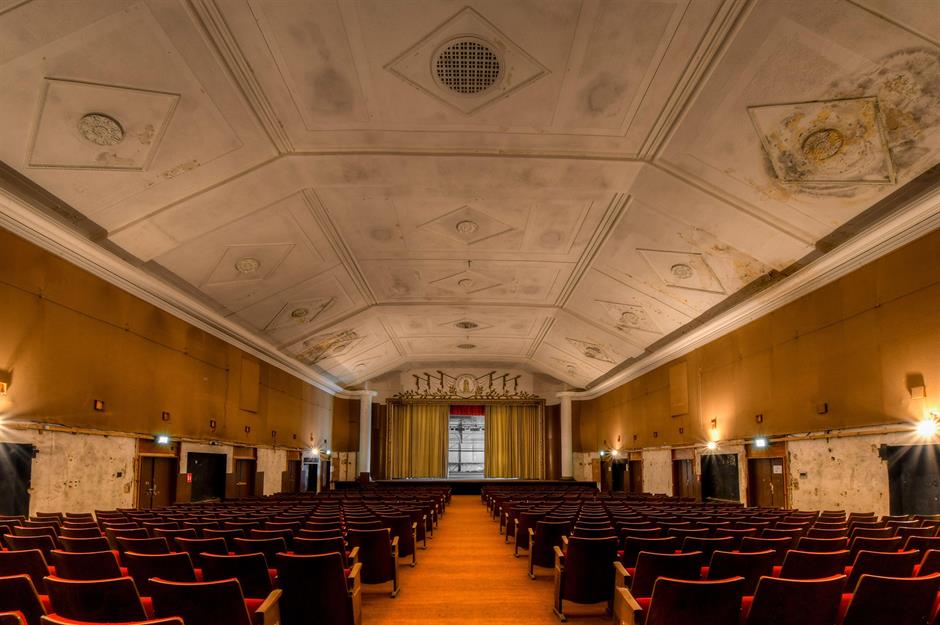
As the largest Soviet military camp outside the USSR, Wünsdorf became known as ‘Little Moscow’ and had shops, a casino, schools and recreational facilities – including this impressive theatre. Despite the patches of black mould creeping across the ornate ceiling, it hardly detracts from the grandeur of the vast room.
Ordinary Germans weren’t allowed to enter the complex unless they had official permission, which led to the site’s other nickname: the Forbidden City.
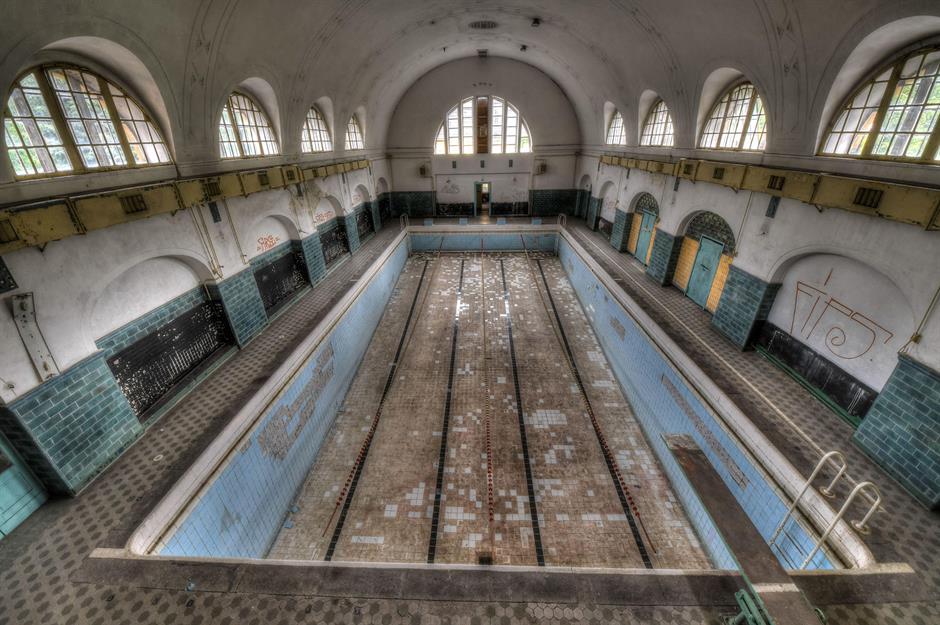
This eerie swimming pool symbolises the neglect the whole site has suffered since it was abandoned in August 1994. The Russians left in such a hurry that they left behind 98,300 rounds of ammunition, almost 30 tonnes of rubbish, shops full of electronics and even their pets.
While robustly built, the site was looked after for years by just one caretaker, leaving the estate to languish. This may have deterred potential buyers when the complex went on the market for £3 million ($3.8m) in 2015.
A far cry from its heyday when it was teeming with life and hosting everything from Bolshoi Ballet performances to volleyball competitions, the officers’ house is now a forlorn remnant of the Soviet age.
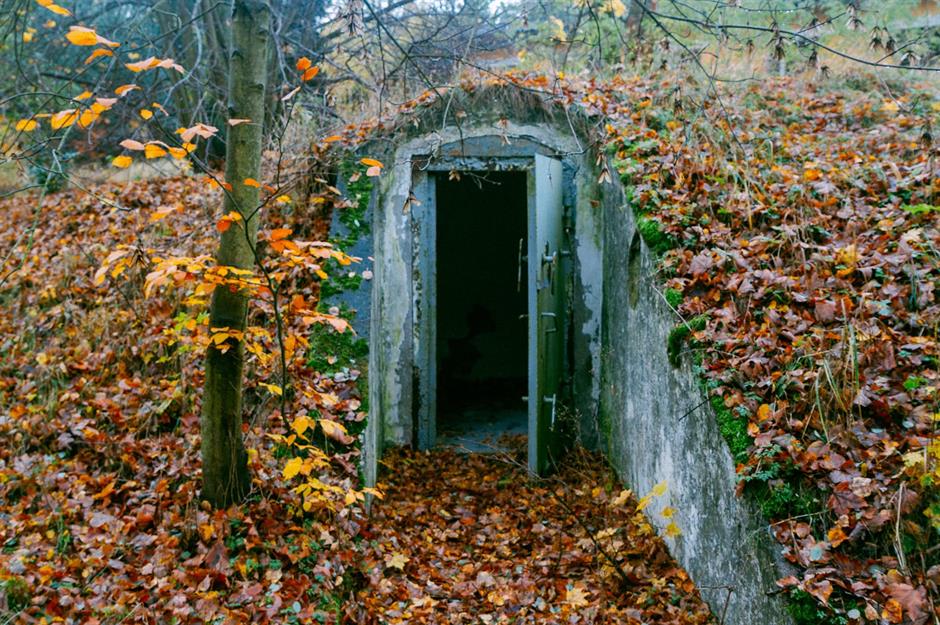
This sinister-looking entrance lies almost hidden in the overgrown grounds. It leads to a mysterious corrugated metal shelter below.
Across the wider estate, the extraordinary ‘bunker town of Wünsdorf’ contains the impressive ruins of many large Second World War shelters. Today, the public can tour the bunker area and visit museums and a bookshop.