Standing on the site of a former abbey, Reinhardsbrunn Castle in the state of Thuringia has a checquered past – as well as links to the British royal family.
Thank you for reading this post, don't forget to subscribe!The original monastery was built in 1085, however, it was ransacked and left to ruin following Germany’s Peasants’ War in the 16th century and later used to hold religious prisoners.
Its origins might make Reinhardsbrunn seem an unlikely backdrop for one of the greatest royal romances of the 19th century, but that’s exactly what it became…
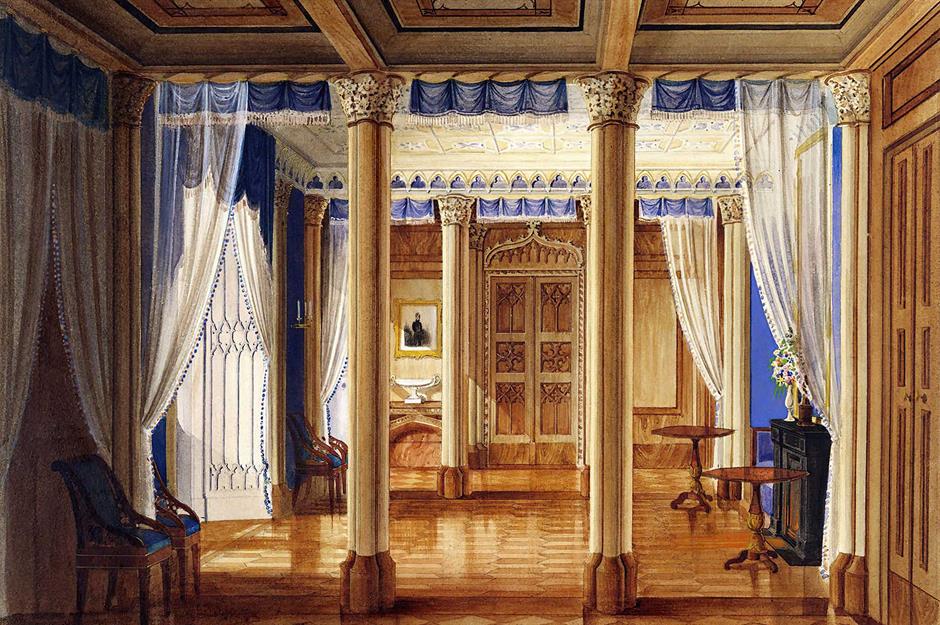
In 1828, Duke Ernst I of Saxe-Coburg and Gotha turned the monastery into a neo-Gothic-style pleasure palace surrounded by a landscaped park and hunting ground.
This watercolour, painted around 1847, shows an upstairs drawing room. Queen Victoria is said to have admired the floor “of inlaid wood, dark and light” during a visit to Reinhardsbrunn.
The young British monarch met Ernst’s son, Duke Albert of Saxe-Coburg and Gotha, several times at the castle before the pair married in 1840. They were famously happy together and their son King Edward VII began the British Saxe-Coburg-Gotha line. His son, George V, changed the family name to Windsor during the First World War and so it remains today.
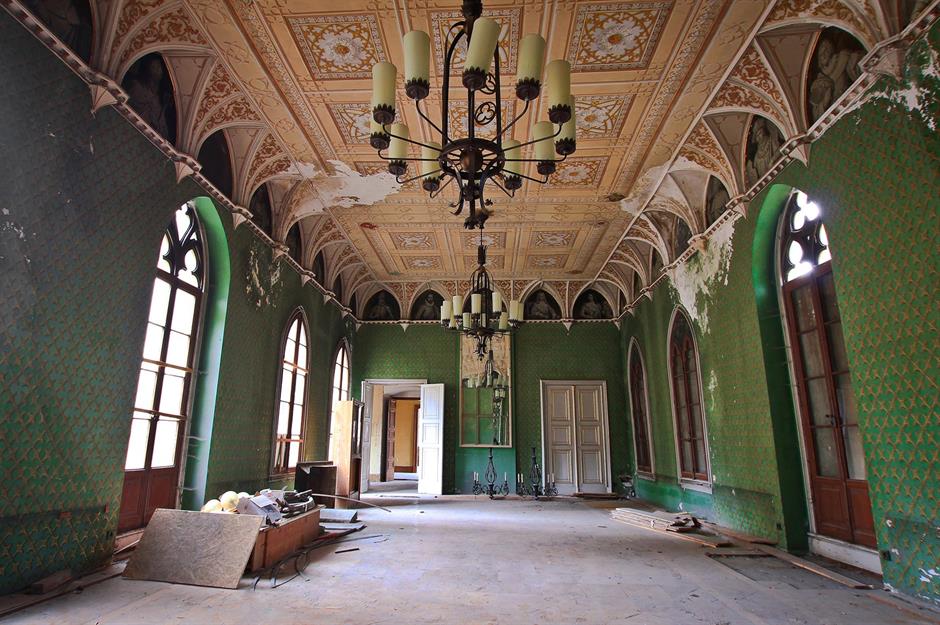
With such strong links to royalty, it seems incredible that Reinhardsbrunn was eventually abandoned and left to decay. Sadly, that’s exactly what happened.
The once-grand home was used as a Soviet hospital after the Second World War and then operated as a hotel from 1961 onwards until it closed in October 2001.
This photo of the castle’s extravagant Green Hall shows the extent of the decay just 15 years later.
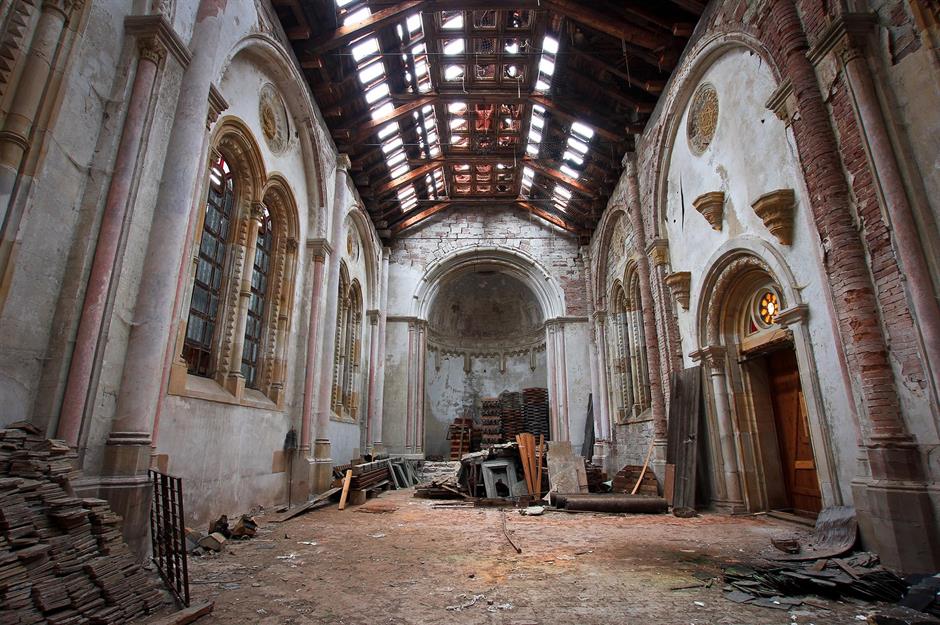
Neglected and seemingly used as a dumping ground for building materials, the castle’s chapel has suffered badly. Its ceiling was once adorned with panels of blue glass inlaid with transparent stars, which must have been a mesmerising sight for worshippers below.
In 2006, the castle was bought by a construction company for just €25,000 – that’s about £31,200 ($39.6k) today. Two years later, the company was acquired by Russian investors who planned to turn the castle into a luxury hotel. In 2009, ownership of the estate transferred again when the company changed hands once more, this time snapped up by another Russian businessman.
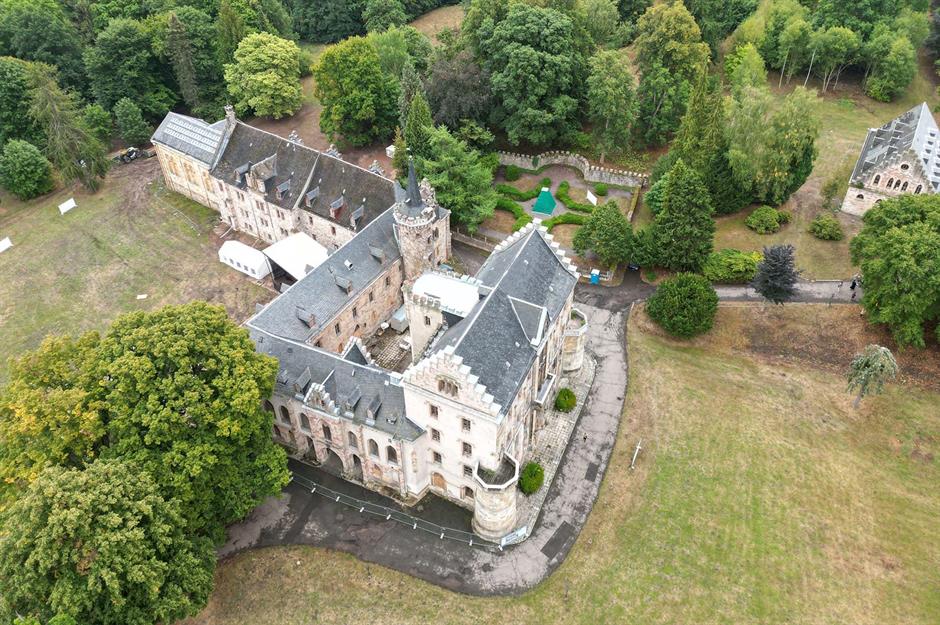
Sadly, Reinhardsbrunn remained neglected and fell further and further into disrepair. Seeking to protect the house, officials from the state of Thuringia reportedly used a heritage preservation law to take possession of the castle in 2018.
Today, preservation work is underway and while a full restoration may cost up to €40 million (£34.2m/$43.4m), there is new hope for the grand residence, which has become known affectionately as ‘Schloss Rapunzel’ thanks to its ivy-covered tower.